

Besplatni Hosting | Web Hosting | Zakup Domena | Supetar - Brac - Croatia | MaXtel | Mikrotik Web Shop | Croatia Holidays | Apartments Croatia

Summer in the heart of Dalmatia!

Poljica

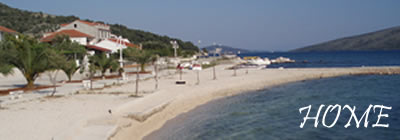
Poljica is a little Middle Dalmatian village, former fishermen settlement and today small paradise for those seeking for peace, quiet and friendly environment.

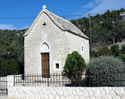
In the village there is a small votive church of St. Luka, which was build in the period around the 10th century.

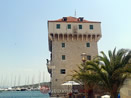
Only a few kilometers away in the historic village Marina, is a medieval tower which served the bishops of Trogir for a vacation, and as protection from the Turks.
PoljicaPoljicaClick to see

What to see...

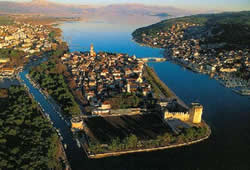
TrogirTrogir - (10 km east) Once called Tragurion, is ac settlement founded by the Greek colonists, merchants from the island Issa ( Vis) in the 3rd century B.C., Although on that small island the first Greek settlements took place. As the recent arheological excavations have shown, the life commenced in the Prehistoric Period. Later on, as a part of the Roman empire, Tragurium, roman oppidum, accented with high quality marble. At that time life wasn't just in the city, but in the fields and rustic villas. Trogir is a treasury of art, or the city museum as one of the leading art historian Bernard Berenson said. It is logical that this destination is one of the most interesting spots on croatian coast from the early beginnings of tourism in Croatia.
see more

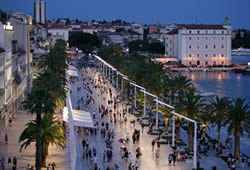
SplitSplit - (25 km east) is located on the Adriatic coast in Dalmatia in Split (Marjan) peninsula. Panoramic Split can get to see on the first Marjan Vidilica or the 11 km distant fortress that sees the entire Split and Split's sea around the islands. Diocletian's Palace is the largest and best preserved Roman palace in the world. The aqueduct that brings water from the source of the river Jadro is used partly today. Today are preserved complex of walls, 4 door (Gold - Porta Aurea, Silver - Porta Argentea, Iron - Porta Ferrea and Brass - Porta Aenea ), regal mausoleum (now the cathedral. Duje), corner towers, the Temple of Jupiter, or temple of all gods, the central square - Peristil, and directly south of the peristyle, vestibule.
see more

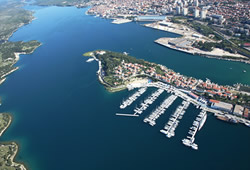
Šibenik Šibenik (40 km west), the oldest Croatian town on the Adriatic, is situated in well natural port, the middle eastern Adriatic coast, anciant Adriaticum mare, at the mouth of the Krka River, probably in a place where some of the first settlers saw the croatian sea. It was the first mentioned in the 1066th, at Christmas (in the charter of King Petar Kresimir IV.). After the Croatian rulers (and the Croatian-Hungarian rulers), Šibenik came under the nearly 400-year old government of Venice, and from that time originates and most significant cultural-historical monument of Sibenik - Šibenik's Cathedral - famous St. James, built in the 15th and 16th century. In the 1797. Šibenik becomes the part of the Habsburg's monarchy (with the current government of France at the time of Napoleon) until 1918.
see more

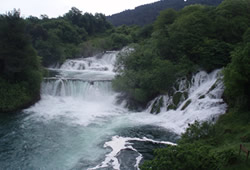
KrkaKrka (50 km west) is one of the national parks in Croatia. The park is named after the river Krka, which is part of the park. The National Park is located in central Dalmatia downstream from Miljevac, and only a few kilometers northeast of the city of Šibenik. It is well known for a large number of lakes and waterfalls. Skradinski buk is the last, seventh and thevlongest travertine barrier on the Krka River and one of the most famous natural beauties in Croatia. see more